


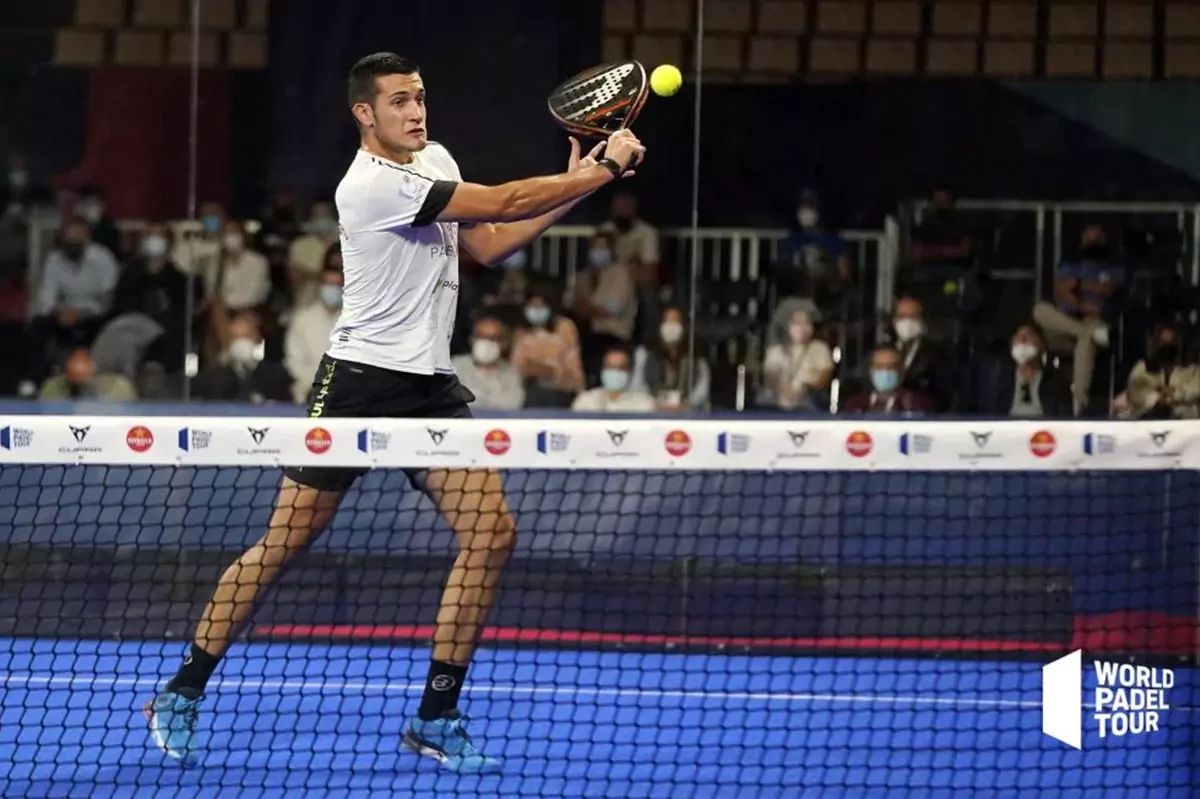
As an enthusiastic padel player, I've learned first-hand that the resting hand plays a crucial role in maintaining balance, coordinating movements, and preparing for shots. When moving around the court, your resting hand acts as a counterweight to the racket hand, helping you maintain stability and control. The key is that when you're about to hit the ball, your resting hand helps judge distance and align your body properly.
So where should your resting hand be during a padel match? It depends on the situation, but there are some useful guidelines to follow:
Where to Place Your Resting Hand in Padel 👇
Waiting for the Serve: When in ready position awaiting the serve, your resting hand should be in front of your body at roughly chest height. This stance makes it easier to keep balanced and change direction rapidly. It also allows quickly bringing the resting hand to the racket if required to hit a two-handed backhand.
Moving Around the Court: As you move around the court, your resting hand should coordinate with your racket hand. If you go right, your resting hand goes left, and vice versa. This counterbalancing movement helps maintain stability and control your motions.
Preparing to Hit: As you get ready to strike the ball, point your resting hand toward the incoming ball. This assists with judging distance and aligning your body accurately. After contact, your resting hand should follow through in the same direction as the racket, aiding balance and directing the shot.
Common Resting Hand Mistakes in Padel
Now that we've covered proper positioning, let's review some frequent errors players make:
- Holding the resting hand too low, especially when waiting for the serve. This can disrupt balance and slow reaction time. Keep it around chest level.
- Not using the resting hand for balance during movement. Remember, it should coordinate with the racket hand.
- Failing to point the resting hand at the incoming ball. Result? Poor alignment and inaccurate shots.
Drills to Perfect Resting Hand Technique
Like any padel skill, mastering resting hand positioning requires practice. Here are some helpful drills:
- Balance drills - From ready position, work on moving your resting hand in sync with the racket hand while maintaining stability.
- Alignment drills - Stand in front of a mirror and point your resting hand toward your reflection, focusing on precise form.
- Shadow swinging - Mimic padel strokes and motions without a ball, concentrating on proper resting hand position.
These exercises build muscle memory and ingrain sound resting hand habits.
Proper Grip Technique
The grip is also a key factor in effective use of the resting hand. Here are some grip pointers:
- Semi-western forehand grip - Ideal for most forehand shots. Index knuckle on bevel 2, thumb on back of handle.
- Two-handed backhand grip - Dominant hand in semi-western, non-dominant in eastern or continental.
- Continental grip - Fingers point up the handle. Good for volleys and specialty shots.
- Watch wrist angle - Avoid bending wrist drastically. Keep straighter alignment.
- Light hold - Grip firmly but not tightly. Avoid tension that restricts movement.
Take time to find the optimal grip for your game through experimentation and input from coaches. A proper grip promotes control, accuracy and power.
Integrating the Resting Hand into Specific Shots
Now let's examine how to effectively incorporate the resting hand into various padel strokes:
Forehands
- Guide non-dominant hand in front of body to aid balance as you set up.
- Point hand toward oncoming ball to assist alignment as you prepare to swing.
- Let resting hand drift naturally to non-dominant side as you swing through the ball.
- Finish with hands together out in front, guiding balance and control.
Backhands
- Use both hands on racket for added power and stability.
- Line up knuckles on top of dominant hand for clean contact.
- Non-dominant hand acts as guide, positioning racket face squarely.
- Follow through together over non-dominant shoulder.
Overhead Smash
- Non-dominant hand points to ball initially to calibrate distance.
- As dominant hand cocks back, allow resting hand to lift naturally for balance.
- Swing fully through the smash, guiding non-dominant hand across body.
- Finish with both hands fully extended together in front.
Serve
- Hold non-dominant hand in ready position to assist initial balance.
- Toss ball with dominant hand, allowing non-dominant hand to drift back.
- As toss hand moves forward, drive non-dominant hand up for balance and rhythm.
- Finish with resting hand moving across body for optimal follow-through.
Return of Serve
- Prep both hands together in ready position at chest level.
- As serve is struck, point non-dominant hand toward ball to calibrate.
- Swing dominant hand while allowing non-dominant hand to guide body rotation.
- Follow through over non-dominant side.
The Volley
- Prep hands together in front to aid balance.
- Point non-dominant hand toward incoming ball.
- Maintain steady head position as non-dominant hand guides body.
- Follow through together, hands moving in unison.
The Lob
- Align hands in ready position, palms down to assist lift.
- Lift non-dominant hand upward as dominant hand contacts the ball.
- Elevate both hands fully to generate topspin and lift.
- Land in ready position to prepare for next shot.
As shown above, the resting hand serves important strategic functions across a variety of padel strokes. Make a conscious effort to integrate proper hand positioning into your technique.
Common In-Match Resting Hand Situations
Beyond specific shots, let's examine some common in-match scenarios where the resting hand plays a key role:
Approaching the Net
- Extend resting hand forward for balance and control as you move forward.
- Use resting hand to protect your space and defend the net zone.
- Keep resting hand active and engaged for quick volley and reaction time.
Handling Low Shots
- Drop resting hand low to match ball level and maintain balance.
- Avoid over-extending by keeping base solid as you absorb low.
- Return to neutral position quickly after handling low balls.
Retrieving Lobs
- Twist body and lift resting hand high overhead in sync to track lobs.
- Use hand to shield eyes from sun when tracking skyward shots.
- Point hand toward landing area to move into optimal position.
Recovering to Center
- Glide resting hand smoothly back to center ready position.
- Maintain balance and controlled speed with engaged resting hand.
- Keep hands active and ready as you reset after shots.
Being aware of optimal resting hand positioning during match situations will elevate your padel abilities.
Physical Conditioning for Resting Hand Strength
Proper conditioning is vital for endurance and strong, flexible hands and wrists:
- Wrist curls - With dumbbell or resistance band, flex wrists to strengthen forearms.
- Finger extensions - Open and close hands to work finger joints and dexterity.
- Forearm planks - Engages muscles used to stabilize resting hand.
- Wrist rotations - Circle wrists smoothly in both directions.
- Squeeze balls - Strengthens grip and hand muscles.
- Stretching - Extend, flex and hold stretches for hands and wrists.
With consistent training, you'll enhance resting hand durability, reducing fatigue and injury risk.
The Importance of Consistent Practice
Like any padel technique, mastery of the resting hand comes through continuous practice. Be sure to:
- Train resting hand positioning in drills and shadow swinging.
- Focus mentally on hand placement during matches.
- Regularly review footage to spot errors and areas for improvement.
- Take input from coaches on ways to optimize your hand mechanics.
With mindful, dedicated practice, resting hand skills will become second nature!
The resting hand may seem insignificant, but it impacts balance, coordination and stroke production. Truly elevate your padel game by honing ideal resting hand form through purposeful training and match experience. Your hard work will pay off with better performance! Now get out there and play your best padel ever! 🎾
