


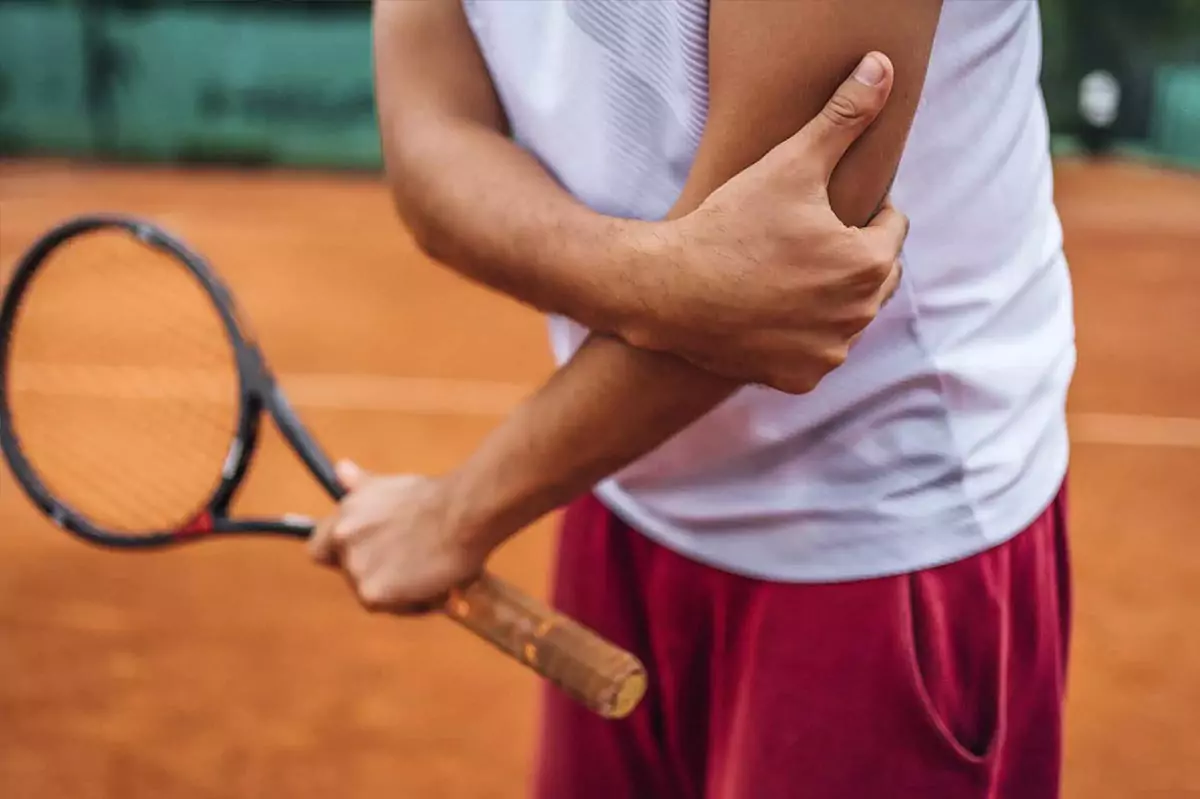
What is Tennis Elbow and what causes it in Padel?
Tennis elbow, also known as lateral epicondylitis, is a common injury caused by overuse of the muscles in the forearm that extend the wrist and fingers. In padel, repetitive motions like serving, volleying, and smashing can put a lot of stress on these muscles and lead to inflammation.
The main culprit is the repetitive motion of the padel swing, which requires extending the wrist again and again. Gripping the paddle tightly and using improper technique can aggravate the tendons. Hitting the ball off-center on the paddle can also transmit more vibration to the elbow joint.
How can I prevent and treat Tennis Elbow from Padel?
To help prevent tennis elbow in padel:
- Warm up properly before play and cool down and stretch afterwards
- Use a padel paddle with appropriate grip size and vibration dampening
- Technique is key - avoid "wristy" shots and practice smooth strokes
- Build strength in the forearms with exercises like wrist curls and reverse wrist curls
- Take frequent breaks during long sessions to rest the arm
- Wear an elbow brace or compression sleeve to support the joint
If you develop tennis elbow, treatments include:
- Rest the arm from padel until pain and inflammation subsides
- Ice the elbow for 15-20 minutes after play
- Use NSAIDs like ibuprofen to reduce pain and swelling
- Try counterforce bracing just below the elbow
- Stretch and massage the forearm muscles
- See a physical therapist for exercises and modalities like ultrasound or iontophoresis
Cortisone injections may be considered for more severe cases. Surgery is a last resort for those who do not improve with conservative treatment.
What are the best padel paddles and strings to prevent elbow injuries?
Some key features to look for in padel paddles and strings that can help prevent elbow injuries:
- Vibration Dampening: Paddles that absorb shock and vibration, like models with EVA foam cores, can reduce strain on the elbow. Composite materials like carbon fiber also dampen vibration.
- Head Light Balance: Paddles with more weight in the handle reduce vibration and muscular effort in the forearm. Lighter paddle weights (325g or less) are ideal.
- Grip Size: Choose a grip size that allows you to grip the paddle lightly without over-squeezing. Overgripping contributes to elbow issues.
- Low Tension Strings: Try natural gut strings or multifilament strings at mid-range tensions (24-28kg). This minimizes string vibration. Low-powered polyester strings can also be used at low tensions.
- Flexible Strings: Softer and more elastic strings like natural gut reduce vibration transfer to the elbow. Co-polyester and multifilament strings are also more flexible options.
- Wider String Pattern: Wider spaced string patterns deliver more power and allow for lighter stringing tensions, reducing arm stress. Patterns like 16x19 are ideal.
What is the best treatment for Tennis Elbow from Padel?
The most effective treatments for tennis elbow caused by padel focus on alleviating pain and inflammation while resting the elbow, along with rehabilitating the arm. Key treatments include:
- Ice and NSAIDs: Ice the elbow for 15 minutes after play, and take over-the-counter NSAID medication like ibuprofen to reduce swelling and pain.
- Rest: Take a break from padel for 2-4 weeks to allow the elbow to recover.
- Elbow Brace: Wear an elbow strap just below the painful area to help take pressure off the tendon.
- Physical Therapy: Stretching, massage, and eccentric exercises will help strengthen the forearm and wrist muscles to prevent re-injury.
- Improving Technique: Working with a coach to correct flaws like using too much wrist and improper footwork helps reduce strain on the elbow.
- Cortisone Injections: For severe cases, corticosteroid injections can provide anti-inflammatory effects. Usually 1-3 injections are given.
- Platelet-Rich Plasma (PRP) Therapy: Multiple PRP injections may stimulate tissue healing.
- Surgery: If conservative treatments fail, surgery to repair the tendon may be considered. This is rare and only done for chronic cases.
With a period of rest, proper treatment, and technique adjustments most cases of tennis elbow from padel can resolve within 6-12 months. Seeking help from sports medicine specialists is recommended to aid recovery.
How long does Tennis Elbow from Padel take to heal?
The timeline for tennis elbow caused by padel to heal can vary depending on severity, but you can expect:
- Mild Cases: May heal in 4-6 weeks with rest and conservative treatment
- Moderate Cases: May take 6-12 weeks to fully recover
- Severe Cases: Can take 3-6 months to resolve, and may require intensive treatment like PRP or surgery
In general, the healing process goes through three main phases:
Acute Phase (1-2 weeks)
This early phase is characterized by pain, swelling, and discomfort at rest. Activity is very limited without pain. Ice, bracing, and rest are recommended.
Repair Phase (4-12 weeks)
Gradually increase activity with reduced pain. Stretching and strengthening exercises are added along with modalities like massage. Some residual discomfort may remain.
Remodeling Phase (3-6 months)
Tissue regeneration and collagen remodeling continues. Reinforce strength and flexibility through resistance training. Play can gradually be resumed but some tenderness may still come and go.
Full recovery depends on the severity, with mild cases healing faster if treated properly. Chronic, long-standing cases of lateral epicondylitis may take longer. Persistent pain beyond 6 months may require advanced treatments like PRP or surgery. Being patient and avoiding aggravating activities too soon is key.
What are the risk factors for developing Tennis Elbow from Padel?
Some key risk factors that can contribute to developing tennis elbow (lateral epicondylitis) from playing padel include:
- Incorrect swing technique - Too much wrist action, improper footwork, and "slapping" at the ball strains the forearm muscles.
- Overuse - Playing too much padel, especially after a layoff period, overloads the forearm tendons.
- Paddle grip - Holding the paddle too tightly or using a grip that is too small causes tension in the forearm.
- String tension - Higher string tensions transfer more vibration to the elbow joint.
- Older age - Tennis elbow is more common over age 40 as tendons become less flexible.
- Previous injury - Prior elbow trauma or tendon tears increase vulnerability.
- Poor physical conditioning - Weak forearm muscles, core instability, and poor flexibility put more stress on the elbow.
- Improper training - Insufficient warm-up and stretch cooldowns contribute to injury.
- Incorrect equipment - Using a paddle with insufficient vibration dampening or weight imbalance.
- Fatigue - Playing through exhaustion leads to deteriorating stroke mechanics.
To reduce risk, pay close attention to technique, equipment, and physical conditioning. Avoid overuse when getting back into padel after a break. Gradually increase playing duration and intensity. Proper prevention can help minimize tennis elbow occurrence.
How does padel increase the risk of Tennis Elbow compared to other racquet sports?
Padel puts players at high risk of developing tennis elbow (lateral epicondylitis) for several reasons:
- Confined Space: The limited court area requires more sudden, explosive motions and wrist torque to direct the ball precisely.
- Ball Speed: Padel balls maintain a very high speed due to the walls and court dimensions. The pace requires fast reaction times and biomechanics that strain the elbow.
- Two-Handed Grips: Both forehands and backhands commonly use two-handed grips in padel. This doubles the stress on the elbows and forearm muscles compared to tennis.
- Stroke Mechanics: Many padel strokes like the bandeja involve last-second wrist snaps. The repetitive hyperextension elevates injury risk.
- Vibration: Padel balls are pressurized higher than tennis balls, and the enclosed court creates more ball-paddle vibration exposure through the arm.
- Play Volume: Padel's social nature leads to longer play durations and volumes as players rotate games. Less recovery between matches occurs.
- Learning Curve: Players newer to padel are still developing proper stroke technique, leading to flawed biomechanics that overload the elbows.
Overall, padel's unique court dynamics, stroke patterns, and social team-based format increase the mechanics that can provoke elbow issues compared to most other racquet sports. Proper preparation and smart play habits are essential.
What exercises can I do to recover from Tennis Elbow caused by Padel?
Some beneficial exercises and stretches to aid recovery from tennis elbow (lateral epicondylitis) caused by padel include:
- Wrist curls: With a light dumbbell or resistance band, perform wrist curls and reverse wrist curls to strengthen the forearm flexor and extensor muscles.
- Tyler twist: Hold a paddle upright and twist at the wrist to strengthen forearm muscles in a padel-specific motion.
- Finger extensions: Open and close the fingers against resistance to work the forearm extensor muscles.
- Forearm pronation/supination: Rotate the forearm down and up with a light weight or resistance band.
- Cross-body elbow stretch: Gently pull the elbow across your body using the opposite arm to stretch the lateral tendons.
- Massage: Massage the muscles in the forearms to release myofascial trigger points. Use a massage ball against a wall.
- Eccentric wrist extensions: Slowly lower wrist back while resisting with the opposite hand to load the tendon.
- Flexor digitorum strengthening: Use finger resistance bands to isolate these forearm muscles.
Avoid aggravating gripping and wrist extension activities until pain resolves. A physical therapist can recommend a tailored rehabilitation program. Light, controlled movements are key to rebuilding strength without overstraining.
What is the outlook for recovering from Tennis Elbow caused by Padel?
The outlook for making a full recovery from tennis elbow (lateral epicondylitis) caused by playing padel is generally very good with proper rest and treatment. Here is an overview:
- Most cases resolve in 4-12 weeks with conservative treatment like ice, bracing, activity modification, and physical therapy. Mild cases often recover faster.
- With adequate rest from padel and correction of stroke technique, players can return to play pain-free. It takes time to develop strength and compensatory movements.
- Chronic, stubborn cases may require several months away from padel and more intensive treatments like cortisone injections or PRP therapy.
- Only about 5-10% of cases are truly refractory to conservative treatment and require surgical repair. This is a last resort option.
- Recurrence is common (50% risk) if the root biomechanical causes are not addressed and playing volume/intensity is rapidly increased.
- Complete resolution is expected if activity is resumed gradually under the guidance of a physiotherapist and doctor. Pacing return to play is key.
- Preventative measures like strength training, proper swing mechanics, equipment, and warm-up routines can help avoid repeat injury.
While recovery takes patience, following an appropriate treatment plan gets the vast majority of players safely back on the court. Seeking professional medical guidance optimizes the recovery time and outcome.
Is padel more likely to cause Tennis Elbow than tennis?
Many players report struggling with tennis elbow (lateral epicondylitis) after taking up padel, especially those coming from tennis backgrounds. There are a few factors that suggest padel may provoke elbow issues more often than tennis:
- Two-handed grip: Both forehand and backhand strokes commonly use a two-handed grip in padel putting more repetitive stress on both elbows.
- Confined space: The limited court space requires quicker reaction times and more explosive arm movements to place shots precisely.
- Stroke mechanics: Padel features more wristy strokes like the bandeja volley with late wrist snaps. Repeated hyperextension can irritate the tendon.
- Ball speed: The walls of the court keep balls moving faster in padel placing greater demands on the forearm muscles.
- Vibration: Padel balls maintain extremely high pressures (2-3 bars) transmitting more vibration into the elbows compared to tennis.
- Play duration: Padel's social format leads to longer continuous play durations compared to singles tennis matches.
- Learning curve: Newer padel players are still developing proper swing technique leading to flawed biomechanics that strain the elbow.
However, there are fewer serves in padel compared to tennis, which eliminates a very demanding stroke on the elbow. Proper prevention and monitoring of training loads can help minimize injury risk.
How can I adjust my padel equipment to prevent Tennis Elbow?
Making some key adjustments to your padel paddle and strings can help prevent tennis elbow (lateral epicondylitis):
- Paddle weight: Use a paddle at 350g or lighter to reduce vibration and impact on the elbow joint.
- Grip size: Ensure you have an appropriately sized grip to hold the paddle gently without squeezing.
- ** Balance**: A head-light balanced paddle effectively absorbs shock and requires less muscle effort.
- Shape: Consider a teardrop or diamond-shaped paddle which offer a larger sweet spot.
- Materials: Paddles with EVA foam cores better attenuate vibration compared to carbon alone.
- String pattern: Wider patterns like 16x19 allow lower string tensions, reducing arm stress.
- String type: Softer multifilament or natural gut strings transmit less vibration over polyester.
- Tension: Drop tension down to 24-26 kg especially if using stiffer strings to decrease vibration.
- Dampener: Always use a string dampener at the bottom of the string bed to absorb vibration.
A padel shop can help select appropriate equipment to enhance control and reduce biomechanical forces on the elbow. Proper fit and materials are key for injury prevention.
Are there any supplements that can help treat Tennis Elbow from Padel?
Some supplements may help reduce inflammation and support recovery when dealing with tennis elbow (lateral epicondylitis) caused by padel:
- Curcumin: Curcumin is the active compound in turmeric and has anti-inflammatory properties. It may help relieve pain.
- Omega-3 fatty acids: Fish oil supplements provide omega-3s that help reduce inflammation.
- Vitamin C: Vitamin C supports collagen production which is important for tendon repair.
- Collagen: Supplemental collagen peptides provide the collagen building blocks used in tendon tissue regeneration.
- Arnica: Arnica is an herbal extract used topically and orally to reduce swelling and bruising.
- Boswellia: This ayurvedic herb contains anti-inflammatory compounds that may assist elbow tendon healing.
- Bromelain: Derived from pineapple, it contains enzymes that decrease inflammation.
- MSM: Methylsulfonylmethane (MSM) has shown promise in reducing musculoskeletal pain and inflammation.
Always consult a doctor before taking new supplements, especially with pre-existing health conditions or medications. While possibly beneficial, supplements should not replace standard treatments for tennis elbow.
How can I modify my padel technique to prevent re-injury after Tennis Elbow?
To help prevent re-aggravating tennis elbow when returning to padel after recovery, consider making these technique modifications:
- Use smooth strokes without excessive wrist action or hyperextension. Keep the wrist stable.
- Employ more shoulder turns and body rotation to generate power instead of the wrist.
- Contact the ball out in front of you instead of reaching or slap shots.
- Use grip sizes that allow a light hold without squeezing the paddle tightly.
- Consider a two-handed backhand if you've had elbow issues from a one-handed stroke.
- Split step to be in better position to prepare your shots with minimal last-second adjustments.
- Reduce the number of high-impact smashes. Use placement over power.
- Favor control and consistency over speed and spin on your shots.
- Maintain proper footwork and balance to prevent overcompensation with the upper body.
- After mistakes, take time to reset before the next point instead of rushing.
- Communicate with your partner to avoid running for balls you can't reasonably get to safely.
Redeveloping your padel stroke fundamentals under the guidance of a coach or physical therapist is crucial to promoting good mechanics that avoid elbow strain upon returning to the court.
What preventative measures can reduce my risk of getting Tennis Elbow from Padel?
Some important preventative measures players can take to reduce the likelihood of developing tennis elbow (lateral epicondylitis) from padel include:
- Warm up properly before play with full arm and wrist ranges of motion.
- Maintain muscle balance between forearm flexors and extensors with strength training.
- Tape or brace vulnerable elbows proactively during play for compression support.
- Use vibration-dampening paddles, strings, and grips.
- Frequently change wet grips.
- Maintain proper stroke technique - avoid wrist snaps and off-center ball contact.
- Treat minor elbow pain early with rest, ice, and NSAIDs before it worsens.
- Schedule days off and avoid overuse during periods of increased play.
- Hydrate well and avoid playing through fatigue.
- Stretch arms thoroughly after play focusing on the forearms and wrists.
- Consider working with a coach or physiotherapist to correct any technical flaws.
Being proactive with equipment choices, smart training habits, technique, and preventative care are the best ways to avoid this overuse injury in padel.
What are some common myths about Tennis Elbow in Padel?
There are some misconceptions about the causes and treatment of tennis elbow in padel players:
- Myth: Tennis elbow is solely due to poor technique.
Fact: While flawed biomechanics play a role, several other factors like overuse, equipment, and age contribute.
- Myth: Tennis elbow is the same as golfer's elbow.
Fact: Golfer's elbow affects the medial elbow, while tennis elbow impacts the lateral elbow.
- Myth: Corticosteroid injections will cure tennis elbow.
Fact: Steroid injections only offer temporary pain relief. Rest and rehab are still required to resolve it.
- Myth: Surgery should be the first treatment option.
Fact: Surgery is usually only considered after 6+ months of failed conservative treatment.
- Myth: Once you get tennis elbow, it will keep recurring.
Fact: With proper swing adjustments, equipment, rest periods, and conditioning, recurrence can be avoided.
- Myth: Wrist braces weaken the injured tendons.
Fact: Braces help by reducing strain on the tendon, aiding recovery.
Distinguishing between accurate information and persistent myths will help guide the most effective treatment plan and preventative measures for tennis elbow caused by padel.
So, here is a summary of the key points about tennis elbow in padel:
- Tennis elbow (lateral epicondylitis) is a common overuse injury in padel caused by repetitive wrist extension and forearm muscle strains.
- Proper stroke technique, equipment fitting, and preventative conditioning are key to avoiding tennis elbow in padel.
- Rest, ice, braces, physical therapy, and potentially cortisone injections help treat tennis elbow. Most cases resolve in 4-12 weeks.
- Returning to play after tennis elbow requires gradually building strength and retraining technique to prevent re-injury.
- Padel may provoke tennis elbow more often than tennis due to the enclosed court dynamics and predominant two-handed strokes.
- Adjusting padel paddles, strings, grip size, and swing mechanics can help prevent recurrence of tennis elbow.
- While frustrating, tennis elbow can be effectively treated and future occurrences avoided with appropriate care, conditioning, and monitoring of training loads.
- Patience and utilizing health professionals for rehab and swing adjustments are important for making a full return to padel after tennis elbow.
- With proper treatment, prevention, and monitoring, tennis elbow does not have to become a chronic issue or deterrent from continuing to enjoy padel.
In summary, tennis elbow in padel is common but very manageable with rest, rehabilitation, equipment considerations, and technique modifications to build strength while avoiding overuse. Learning to play pain-free padel is absolutely achievable with the right plan.
