


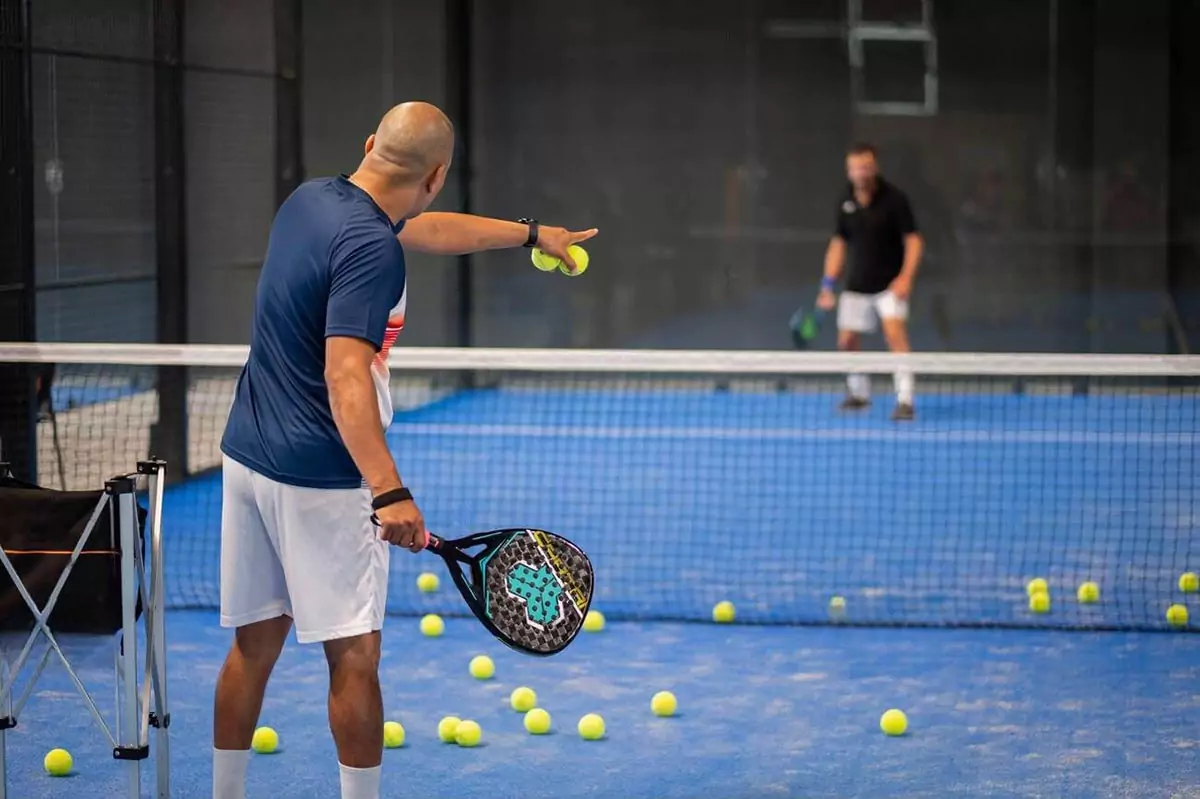
Padel has exploded onto the global sports scene, combining high-intensity rallies with an interactive doubles format. Played on a compact court with walls, padel features dynamic transitions between offense and defense. However, the competitive demands of padel remain underexplored. A new study in the Journal of Strength and Conditioning Research leveraged advanced match analysis to quantify and classify patterns of play among professional players. The insights gained can optimize training programs and game strategy development focused on competition-specific skills.
About Padel
Padel originated in Mexico in the 1970s before growing in popularity in Spain and spreading throughout Europe. The court measures 20 x 10 meters, about 25% smaller than a tennis court. Players compete in doubles, with pairs on either side of a central net. The key feature is the surrounding walls off which the ball can be played before or after bouncing.
Points begin with an underhand serve and then continue into fast-paced rallies featuring a blend of volleys, groundstrokes, and overhead shots. The close confines lead to creative shots involving angles and caroms off the walls. Matches also include constant positional rotations with teammates as players alternate between offense at the net and defense on the baseline.
The interactive format, free-flowing rallies, and doubles dynamics contribute to padel’s rising recreational and competitive appeal. Spain has over 4 million regular padel players while professional tournaments and tours are now held globally. However, there has been limited research into optimal strategies and training considerations specific to padel’s unique court environment and rules.
Quantifying Padel Game Dynamics
The recent study aimed to provide data-driven insights into padel competition by analyzing the technical, spatial, and effectiveness indicators used by professional players during actual matches.
The researchers tracked four high-level padel athletes (with 5+ years on the pro tour) across three competitive games, logging every stroke-by-stroke rally action. In total, 1963 shots were coded based on variables like groundstroke type, height, swing, court position, and outcome. Advanced statistical techniques classified patterns of play and identified relationships between key factors.
Three Game Profiles Emerge
The sophisticated match analysis determined distinct game dynamics related to three court zones: net, middle, and baseline. Each area posed different challenges and required optimization of certain technical-tactical skills.
Net Play: Finishing with Flair
The net zone was where players aggressively attempted to end points, requiring dynamic volleys or overhead smashes. This frontcourt space yielded the highest rate of direct winners through athletic reflexes and shot precision.
Overhead smashes and similar slashes (called “bandejas”) accounted for 59-76% of total net winners. Their velocity and angle made them difficult to return, especially when struck deep crosscourt. Backhand volleys were also useful given their ability to apply tricky backspin.
Protecting the middle lane was another vital net tactic. By volleying straight down this central channel, players could prevent opponents from skirting past them or landing counterattacking shots. This helped maintain offensive positioning near the net.
Middle Play: Transitional Attacking
The middle section connected baseline and net, requiring tactical decisions on how to gain an advantage. When drawn forward, players used volleys or half-volleys to strike quickly before backpedaling. Smashes were again valuable to strike opportunistically after forcing opponents deep or wide.
Backhand volleys remained prominent as a transitional weapon, allowing sharp changes of direction. The middle zone demanded flexibility and court awareness to choose the most strategic options given ball trajectories.
Baseline Play: Working the Angles
From deep court, lob shots became important projectiles aimed toward the sidelines and corners. Their height forced awkward returning angles and movements. Striking near the side walls also complicated matters given the need to pivot and redirect momentum.
Forehand and backhand groundstrokes were used to open up angles crosscourt or attack down the line. Consistent shots moving opponents side-to-side allowed eventually progression back toward net. Interestingly, the backhand accounted for over 40% of total strokes, highlighting its importance in padel.
Optimizing Training and Drills
By classifying dynamics across court zones, these results provide a blueprint for structuring practices and drills that mimic competition scenarios. Coaches can set up targeted training focused on technical-tactical skills optimized for each area.
- Net zone: Explosive smashes and quick, accurate volleys
- Middle zone: Versatile attacking - volleys, half-volleys, smashes
- Baseline zone: Defensive footwork, groundstrokes, tactical lobs
Conditioning can also be tailored, such as sprints and multi-directional patterns matching the start-stop movements of padel across its changing contexts. The substantial backhand use indicates value in drills focused on generating consistency and power on that stroke.
Given padel's reliance on walls, coaches may also integrate practices rebounding balls off surfaces to work on unpredictable caroms. This unpredictability developing quick adaptations would translate directly to competition.
Future Opportunities
While this study provides initial valuable insights, the authors note opportunities for deeper analysis in future work. Individual player statistics could reveal personalized trends and profiles. Investigating sequential rally patterns may also elucidate higher-order tactics, such as common trajectories toward winning or losing points.
Some limitations are inherent in match statistics - while reporting what occurred, they do not reveal the reason behind players’ choices. For example, data shows high smash rates at the net but cannot convey the contextual factors influencing shot selection. Interviews with players to complement quantitative data could bolster strategic conclusions.
Conclusion
This innovative research makes major headway in objectively classifying padel game dynamics across professional-level matches. The data-driven approach identifies competition-specific skills, tactics, and patterns that can directly inform more focused, evidence-based training methods. While further investigation is warranted, these results provide a launch point for coaches and players aiming to maximize their padel performance. Match analysis will only grow in importance as padel climbs the ranks of global participation. Unlocking the science behind the game is key to skill development in this rapidly rising sport.
