


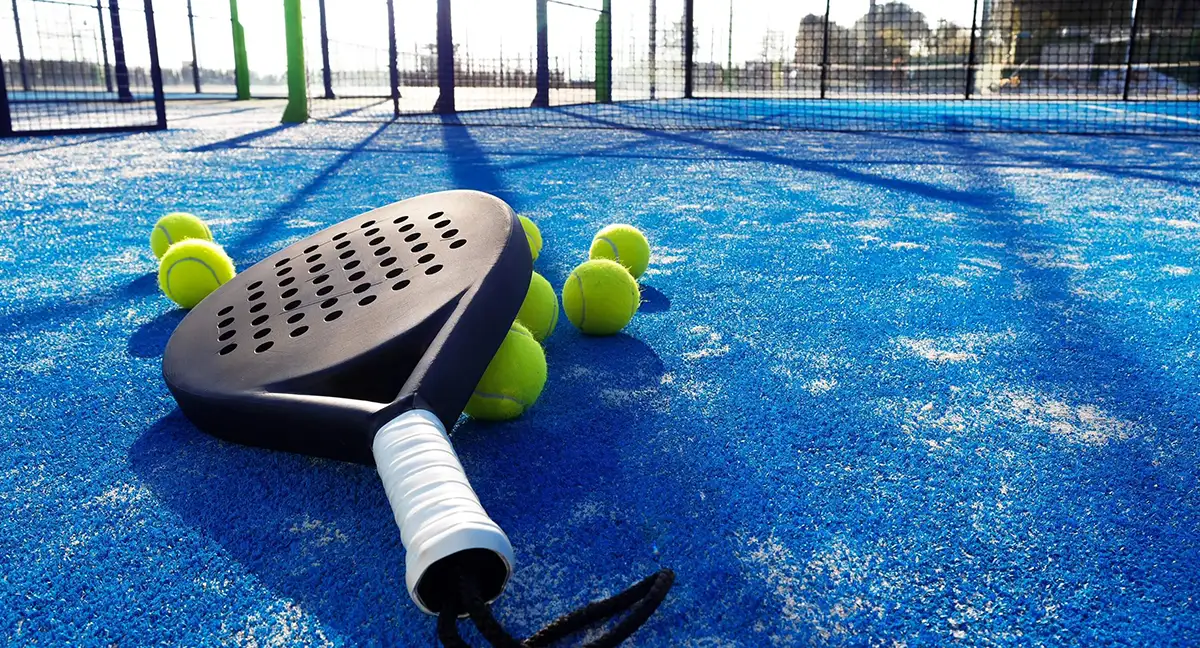
Padel has come a long way from its early days as an obscure racquet sport played mostly in Spain and Latin America. Over the past few years, it has exploded in popularity across Europe, North America, Asia, and the Middle East. What accounts for padel's rapid global growth? For starters, it cleverly combines elements of tennis, squash and badminton into a dynamic and social game suitable for all skill levels. Padel packs all the physical intensity of tennis into a smaller space, with exciting volleys and strategic gameplay. Yet it is also easy for beginners to pick up. The glass walls used in padel courts add a unique twist not seen in other racquet sports. Ultimately, padel simply offers a fun way to get moving and connect with others.
If you're eager to try padel yourself, this guide covers everything you need to know as a beginner or intermediate player. You'll learn the basic rules, techniques, tactics and equipment needed to start playing padel. With tips from experienced padel coaches, you'll be able to develop your skills quickly. Before you know it, you too may be hooked on the energetic game that is sweeping the globe.
Deciphering Padel Court Markings, Rules, and Scoring
Padel is played on an enclosed court roughly a third the size of a tennis court, with walls surrounding the sides and back. The court measures 20m x 10m and has a maximum height of 6m. The court markings resemble those of a tennis court, including service boxes, a center service line, and no ad court. The walls and mesh fencing are unique to padel, allowing the ball to be played off these surfaces during rallies.
Unlike tennis, all service boxes are active during a Padel match. The server must bounce the ball and hit it diagonally into the opponent’s service box. Similar to tennis, the server has two attempts to successfully put the ball in play; otherwise, it's a double fault, and the opponent scores a point.
During rallies, the ball can bounce once on the floor and then be played off the walls. Only the serving team can play the first return off the front wall before the ball bounces. After the ball bounces, both teams can use the walls. If the ball goes over the side walls or doesn’t bounce before hitting the mesh or walls, the point ends.
Scoring in padel is similar to tennis. Points increase from 15 to 30 to 40. If both pairs reach 40-40 (known as juice or deuce), the next point is the “golden point,” where the winning team takes the game. The first pair to win six games, with a lead of two clear games, wins the set. Matches are typically best of three sets.
Honing Tactical Positions and Movement
A crucial tactic in padel is controlling the net space near the front wall, which allows attackers to cut off angles and volley the ball for a winner. After the serve, the server’s partner should quickly move up to secure the net position. Newcomer teams often make the mistake of both staying back, which limits attacking opportunities.
When pushed deep and on the defensive, the goal is to move back up to the net as quickly as possible. Even when cornered at the back, try moving forward after returning the ball, rather than getting stuck playing defensive groundstrokes. Keeping the ball deep to allow your partner time to get back upcourt is crucial.
Mastering Key Padel Techniques & Shots
Effective padel technique requires compact, controlled swings rather than large tennis-style strokes. On groundstrokes, maintain a solid base and body rotation to generate power, with a short backswing and follow-through. Being too loose or wild with groundstrokes will lead to errors.
When playing off the walls, keep shots simple using a short swing without taking huge backlifts or big finishes. This allows for better control and consistency. Avoid attempting ambitious sidewall shots - keeping the ball straightforward often works best.
Lobs are a crucial shot for resetting the point when under pressure. By lifting the ball deep into the backcourt with topspin, you can push opponents back and re-establish your positioning. Vary the height, pace, and spin on lobs to keep opponents guessing.
At the net, the forehand volley is particularly effective for scoring points in padel. Use a continental grip and keep the wrist firm. Rotate your shoulders sideways and strike down through the ball for a penetrating volley. Keep volleys low over the net to increase pressure.
Choosing the Appropriate Padel Gear from Racket to Shoes
Choosing the right padel equipment can significantly enhance your learning and performance. For beginners, the racket design should facilitate easy control and power. A teardrop or rounded head shape is ideal, with a flexible composite frame weighing 350g or less. Entry-level rackets start from around $65.
The racket handle is thicker than a tennis racket and often curved for better wrist support during hard-hit volleys. Some players add overgrips or wristbands for comfort and sweat absorption.
Shoes designed for padel have a reinforced rubber toe box for dragging during low volleys at the net. The soles grip well on a glass court but are still suitable for other surfaces. Other essential gear includes comfortable, loose clothing and eye protection - as the ball can bounce off walls unpredictably.
How to Enhance Your Padel Skills and Strategy
To speed up your learning, nothing beats playing regularly with - and against - better players. You'll quickly pick up their court positioning, shot patterns, and tactics. Arrange games at different clubs to get a variety of opponents. If possible, take some lessons from an experienced padel coach to refine your technique and footwork.
Practice drills like alternating forehands and backhands while your partner feeds the ball are great for grooving strokes. Also, try solo drills playing off the wall to improve shot consistency. Keep sessions focused on quality over quantity of strokes.
Analyze your matches afterward to identify strengths and weaknesses. Are you missing too many backwall returns? Or being aced down the middle on your serve? Identify priority areas to improve. Film your matches to compare your positioning and shot mechanics to top players.
As your level increases, consciously try out more advanced tactics in matches like varying serve placement, throwing in occasional lobs or rapid net rushes. Test different styles against particular opponents to see what disrupts their game.
Mastering the Nuances of Padel for Competitive Play
Once you've mastered the basics, it's time to delve deeper into padel technique and strategy. Refining these subtle skills and tactics is essential for competitive, high-level play against skilled opponents.
Take time to optimize your padel grip, which influences many shots. While a continental grip (V-shaped hand) works initially, you may get more spin and power with a semi-western grip held further down the handle. Experiment to find your optimal grip.
Analyze and improve your on-court movement. React quickly but take small adjustment steps. Use cross-over steps for side-to-side movement and pivot on the outside foot to change directions smoothly. Be light on your feet, ready to move in all directions.
Practice varying spins - topspin drives, flat drives, underspin lobs - rather than just hitting the same pace. Mastering spin gives you another way to manipulate opponents around the court. It also allows curving the ball off the side wall.
Placement and precision are key. Aim serves and returns down the center line or corners to push opponents wide. Vary pace and locations to disrupt their rhythm. Learn how angles and rebounds change depending on where you hit the ball off the walls.
For doubles tactics, communicate constantly with your partner and coordinate positioning. Up your net rushing by surprise-volleying returns aimed at your partner. Poach across to take balls down the middle. Fake one shot but play another to keep opponents guessing.
Investing dedicated time into refining your padel skills is vital. But ultimately, becoming an accomplished player requires match experience. Play people better than you as often as possible. Stay positive through the ups and downs as you integrate advanced skills into your game.
Selecting the Ideal Padel Paddle for Your Playing Style
Your padel racket acts as an extension of your arm, so it’s worth investing time into finding the right one. Manufacturers offer models catering to different player levels and styles. Here's what to consider when selecting a racket that complements your game.
Beginner rackets have a larger head size (around 110 sq cm) for more forgiveness on off-center hits. Intermediate players often prefer smaller heads (95-105 sq cm) for extra control. Heavier rackets (370g+) provide stability on volleys and power on drives. Lighter models (under 360g) suit speedy reaction volleying and quick wrist flicks.
Control-oriented rackets have flexible frames to nip the ball. Stiffer rackets give free power but less finesse. Check the manufacturer’s stiffness rating. Closed string patterns (diamonds) increase spin and control. More open string patterns offer extra power and comfort.
Teardrop-shaped heads are good all-rounders. Rounder heads excel on volleys and flatter heads give driving power.
Consider grip sizes - standard 4 is medium. Size down for small hands or up for larger hands. You want a snug but comfortable grip.
Give a potential new racket a thorough on-court test. How does it feel on different shots and does it match your playing personality? Getting the right racket can immediately improve your padel performance.
Elevating Your Padel Skills to the Next Level
For intermediate players seeking to progress to an advanced level, several key areas to focus your training and practice on include:
👉 Fitness - commit to improving your aerobic endurance, speed and agility through interval training. Padel demands continuous explosive movement.
👉 Mental game - be tough on yourself about shot selection, tactics and focus during drills and matches. Develop mental routines before serving or returning.
👉 Adaptability - practice adjusting your play style and tactics to counter different opponents. Don't rely always on your A game.
👉 Net play - up your net time in matches to create pressure. Improve reaction volleys, swing volleys and putting away easy balls.
👉 Serving - develop an accurate slice serve and flat power serve. Vary placement and spin. Practice against different return styles.
👉 Shot depth - aim to hit deeper and heavier topspin groundstrokes. Take balls earlier and improve footwork to create time.
👉 Wall play - groove the angles of sidewall and backwall rebounds through targeted drills. Learn how spin affects wall bounces.
Taking lessons can help identify priority areas to upgrade your skills. Be patient on your path to the advanced level - it takes time to integrate new techniques and tactics fully into matches. But with consistent, focused practice, your padel will continue improving.
Final Tips to Instantly Enhance Your Padel Game
To conclude, here are some quick tips from expert padel coaches for anyone looking for simple ways to upgrade their game:
🎾 Warm up dynamically - skips, shuffles, sprints. Save long static stretching for afterward when muscles are warm.
🎾 Get compact on shots - no big backswings or loose arm. Keep everything tight and under control. Use Continental grip unless you've perfected semi-Western. Avoid changing grips.
🎾 Strike the ball out in front - don't let it get behind you. Leads to a better consistency.
🎾 Focus on consistent depth - reduce errors by keeping the ball deep especially on the backhand.
🎾 Be patient at the net - let the ball come to you. No need to swing aggressively at everything. Communicate constantly with your partner - essential for good doubles tactics and positioning. Stay positive and upbeat - keep self-talk positive.
Forget mistakes quickly. Have fun out there - padel is designed to be social and enjoyable. The rest follows! So there you have it - a comprehensive guide to boosting your padel skills for beginners right through to the intermediate level. Follow the tips and advice that resonate with your goals. With passion and regular practice, you'll be playing padel like a pro in no time.
We have an article, focused on the fundamentals. You can check here!
Now grab your gear and get out on the court to enjoy this dynamic, addictive sport!
